FANUC Open Platform

Physical AI-Driven Next-Generation Automation
This page showcases the latest examples of Physical AI applications leveraging FANUC's open platform.
By autonomously recognizing their surroundings and understanding human instructions, robots can flexibly adapt to changing conditions, enabling advanced and responsive tasks that were difficult to achieve with conventional teaching methods. This will redefine the future of manufacturing.
2025.12
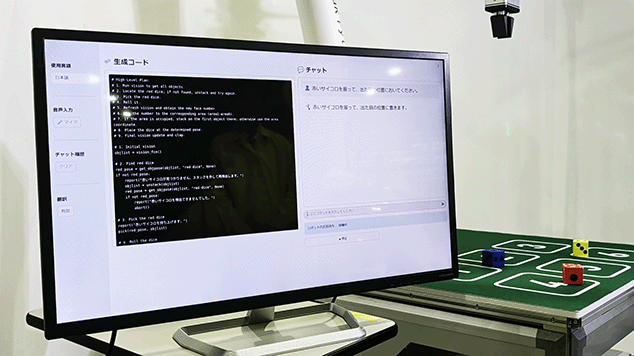
Generative AI × Robots – Voice your Command
AI robots recognize voice commands in multiple languages, automatically generate Python programs using generative AI, and execute commands while perceiving their surroundings.
2025.12
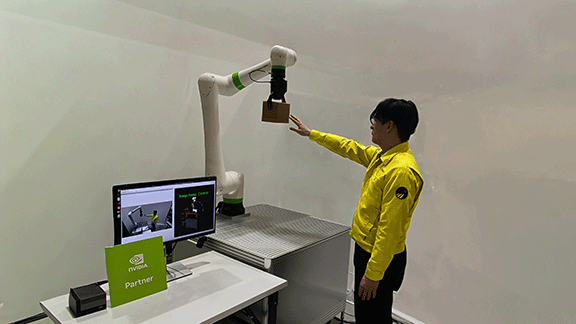
AI Robots that Avoid People
AI robots recognize people and retreat in real time without interrupting their tasks. Once the people are gone, the robot returns to its original path.
2025.12
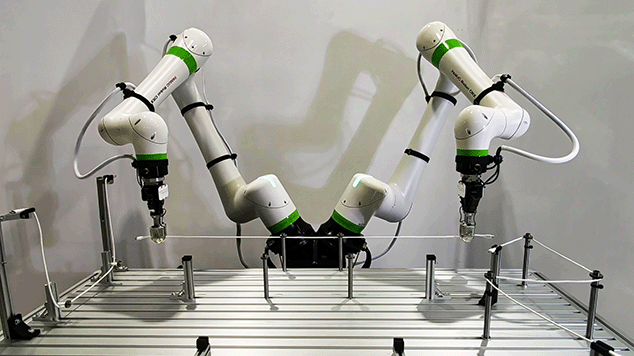
Two Arms Install a Flexible Cable
Two robot arms work collaboratively to handle soft cables with human-like dexterity, recognizing tension while performing wiring tasks.
2025.12
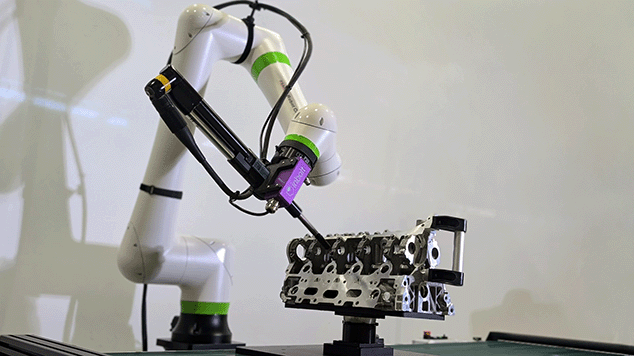
AI Robot Tracks Moving Parts, and Tightening Screws
AI robots identify workpieces moving in three dimensions and follow them in real time. They deliver high tracking performance in 3D space, enabling screw tightening while the parts are in motion.
2026.06
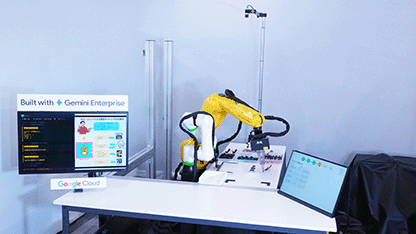
AI Agent-driven Kitting Operations
By issuing instructions in natural language to the AI agent for tasks such as photographing order forms, recognizing text, and transporting trays and parts, the robot executes the kitting of workpieces.
2026.06
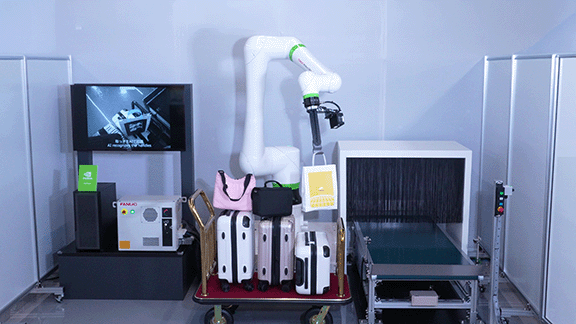
Locating “Handles” and Retrieving Baggage
Using a masterless approach, AI recognizes the "handles" of suitcases and paper bags loaded on a cart, enabling the robot to retrieve the baggage.
2026.06
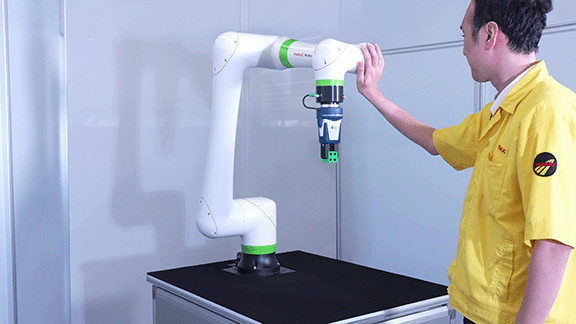
Briefly Pausing the Robot to Allow Human Intervention
If an operating robot is touched by a person, it pauses, allowing the person to safely intervene and perform tasks. Once released, the robot resumes its operation.
2026.06
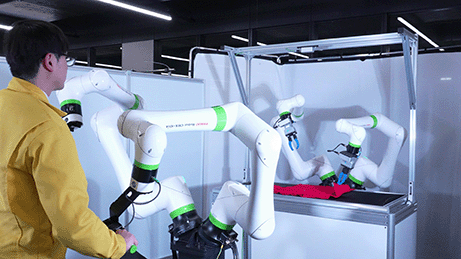
AI Robots Imitating Human Tasks
Two robot arms utilize imitation learning to acquire human skills and successfully fold a T-shirt—a highly flexible object.
2026.08
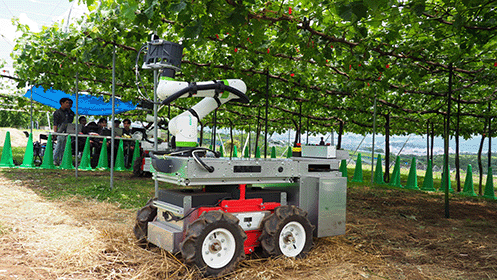
Automating Grape Berry Thinning
The University of Yamanashi research team is taking on the challenge of automating grape berry thinning operations using physical AI built on FANUC open platform.
* ROS is a trademark of the Open Source Robotics Foundation.
** Python is a registered trademark of the Python Software Foundation.
*** GitHub is a registered trademark of GitHub, Inc.